
Everyone is focused on building robots.Somebody has to prove what they did.
For operators who deploy robots and, one day, have to explain what they did.
That is what Pask does.
Pask is the engagement receipt for the robot age: one signed record per engagement, held where the work happened, verifiable in any browser, offline and years later.
Without a signed record, every incident becomes a reconstruction. With one, you produce the file.
Talk to usEngagement-receipt standard
PASK-00045
Seal
SIGNATURE VERIFIED
- Time
- July 2, 2026 · 14:22 CDT
- Asset
- Patrol Robot 04
- Outcome
- Action
- Result
Edit any blue field above.
The signatures verify. The customer, so far, is us.
Every receipt on this page was sealed with real keys on Pask’s own reference site, a staged deployment we built and operate. The signatures verify. The customer, so far, is us. Registration with a Transparency Service, which our filed profile now requires, is not yet built. We wrote that limitation into the specification ourselves rather than wait to be asked.
Billy McKenzie and Rob Wilder, founders
The key never leaves your building.
The signing key is generated inside a secure chip in the appliance you own. It cannot be exported, so no operator, no cloud, and not Pask ever holds a usable copy. Unplug the appliance and the key goes with you.
Keys
Yours, on-site, in silicon.
On-site secure chip
Format
Open to inspect.
Open: IETF RFC 9943 and 9942
Verifier
Anyone can verify.
Offline, in any browser
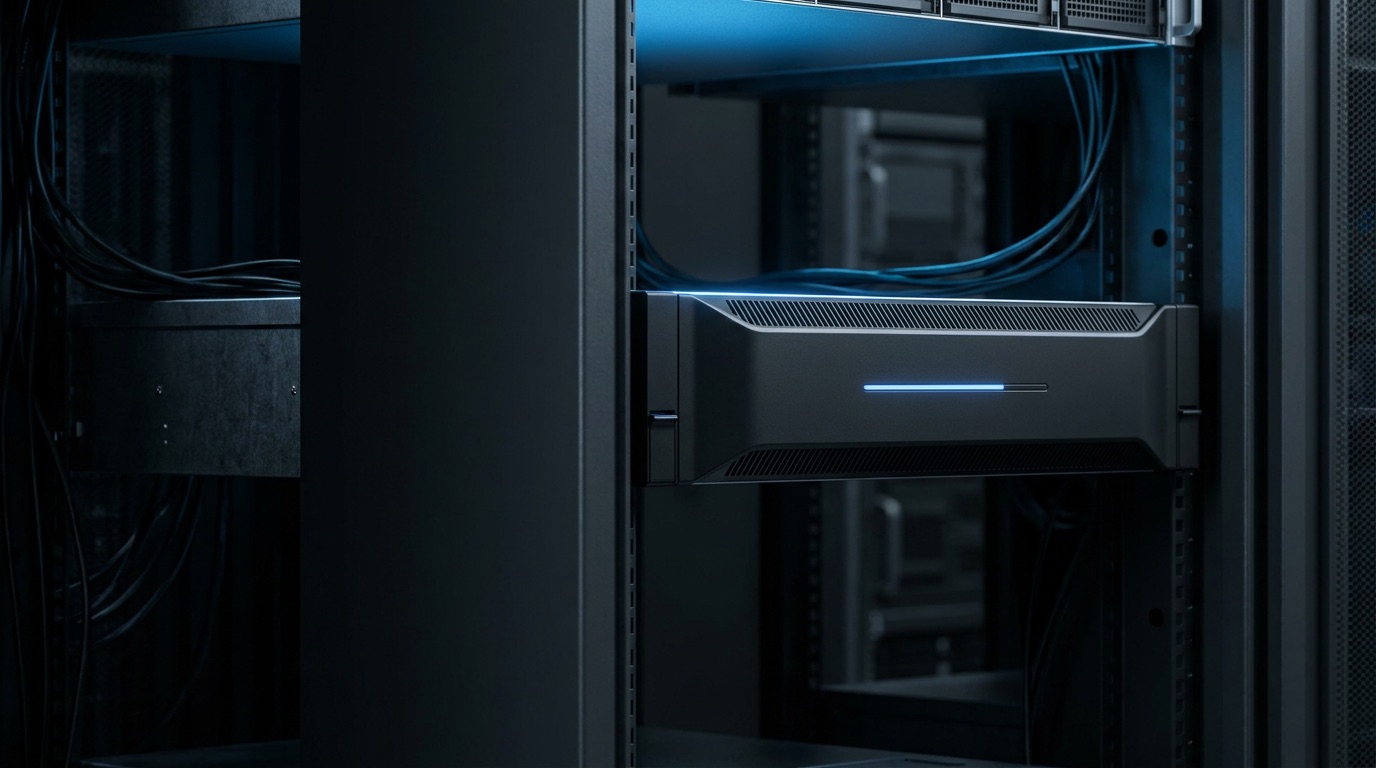
One record, from charter to proof.
How Pask works, for the operator
Install.
The appliance sits beside your robots. Nothing changes about how they run.
Approve.
A named person approves the engagement, once, at the gate.
Prove.
The appliance seals a signed record you can hand to anyone.
How the record is built, in detail
Every signed record follows the same five stages. Nothing is reconstructed after the fact.
- 1
01 · Chartered
The site signs its charter.
A plain-English founding document: what this site is, who may act on it, and what each device is allowed to do. Everything downstream is derived from it.
The charter is the ground truth every downstream record points back to.
- 2
02 · Admitted
Each device joins under contract.
Every robot and sensor is admitted with a signed contract that states what it is and how it speaks. A device that cannot self-attest is represented by a gateway.
No device speaks on the record until it has signed in.
- 3
03 · Approved
A person approves the engagement.
Approval happens once, at the gate, against the charter, by a named party. Never per robot action in the loop. The robots then run exactly as they do today.
One approval, at the gate, by a named party. Not per action, not per robot.
- 4
04 · Sealed
The appliance seals one record.
The on-site appliance witnesses the work and seals a single signed record: who did what, when, and under whose approval, committed to a hash on a key you hold.
When the incident happens, you already have the record. You do not build it after.
- 5
05 · Proven
Anyone verifies it, offline.
The seal recomputes in any browser with no account and no call to us. Change one field of a sealed record and every signature stops verifying.
No account. No call to us. Verifiable years later.
Beside your robots. Never in the path.
Pask is a witness, not a vault: it watches, it never controls. Your robots keep speaking what they already speak, and you re-route nothing.
- 01
Signed in, before it speaks. Each device joins with a signed contract that says what it is and what it may do.
- 02
Read-only, out of band. The appliance reads each device on its own protocol, out of band and read-only. Approval happens once per engagement, never per robot action.
- 03
Written where you already work. Each sealed record writes into the work-order or claim system you already run.
Pask is not for pilots that end when the demo ends. It is not for fleets where no one signs the incident report. It is for operators who already know they will be asked.
For carriers
A stronger starting point for the claim file. Every signed record on this site preserves an account of the recorded engagement for review, producible and verifiable offline, for the moment your adjuster or outside counsel asks what actually happened. It can support an investigation without deciding coverage, liability, or whether the reported work was correct.
The carrier pageFor engineers
The draft, the vectors, the reference site. Pask is filed with the IETF as an individual submission, built on the SCITT architecture: RFC 9943 and 9942, with COSE, CWT claims and JSON canonicalization underneath. Revision -04, dated September 14, 2026, introduces the wilder.pser/0.6 profile. It is work in progress, not an adopted IETF standard and not an IETF endorsement. The reference implementation and its conformance vectors are public; this site runs on our own reference deployment.
Positive and negative reference material for selected checks. Read each fixture’s version, expected result and limitations: this is not a certification suite for every profile requirement, and the signed vector set sits outside the fixtures directory.
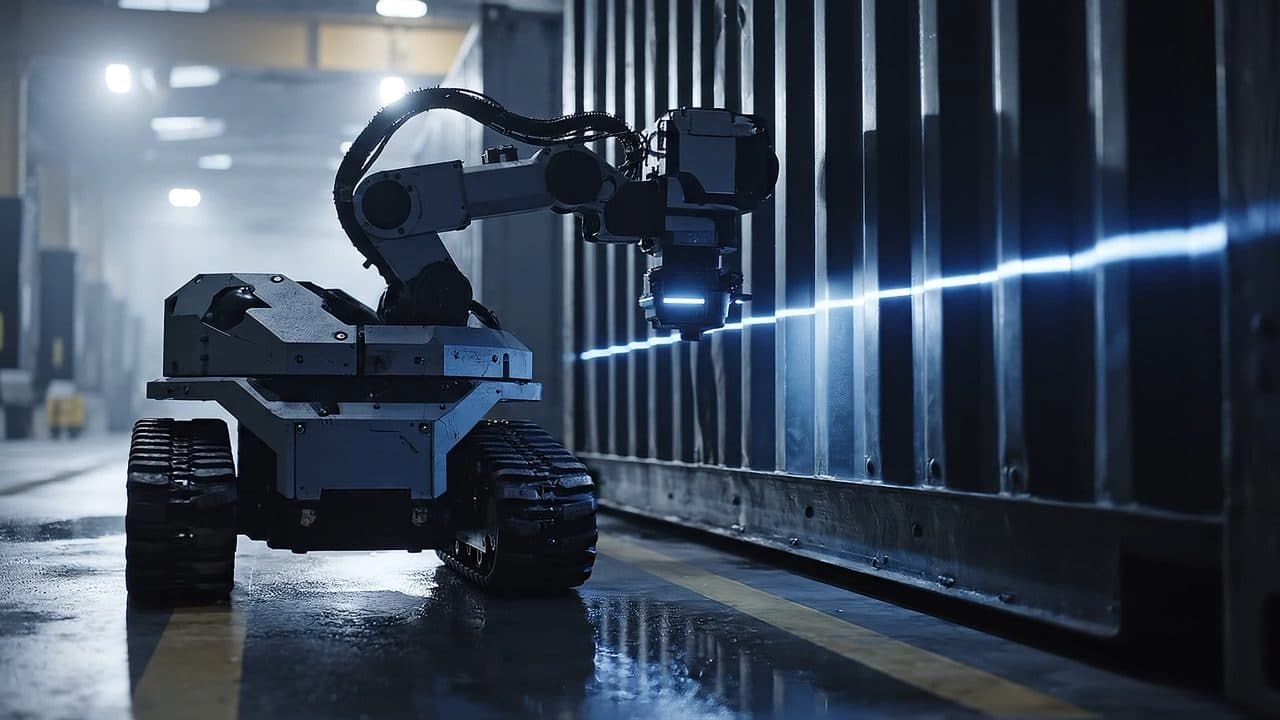
When the dispute comes, you start from evidence, not reconstruction.
Built by Billy McKenzie and Rob Wilder at Wilder Robotics, in Lake Forest, Illinois.